Why Adjust Kids Electric Car Speed for Different Ages?

Time:2026-10-12 Author:Madeline
0%

Why Adjust Kids Electric Car Speed for Different Ages?

A children’s electric car is not merely a smaller vehicle. Its speed affects reaction time, stopping distance, steering control, and injury severity. A three-year-old may press the accelerator suddenly, while a seven-year-old can usually anticipate turns more effectively. How to control speed of kids electric cars for different ages should therefore begin with development, not appearance.

The U.S. Consumer Product Safety Commission’s National Electronic Injury Surveillance System tracks injuries involving ride-on toys and other children’s products. Its safety reports repeatedly highlight falls, collisions, and loss of control as important injury patterns. The American Academy of Pediatrics also recommends age-appropriate riding equipment, adult supervision, and safer environments. Pediatric emergency physician Charles Jennissen, a recognized ATV-safety researcher, states, “ATVs are not toys.” The same warning deserves careful consideration for electric ride-on cars, even though their power and design differ.

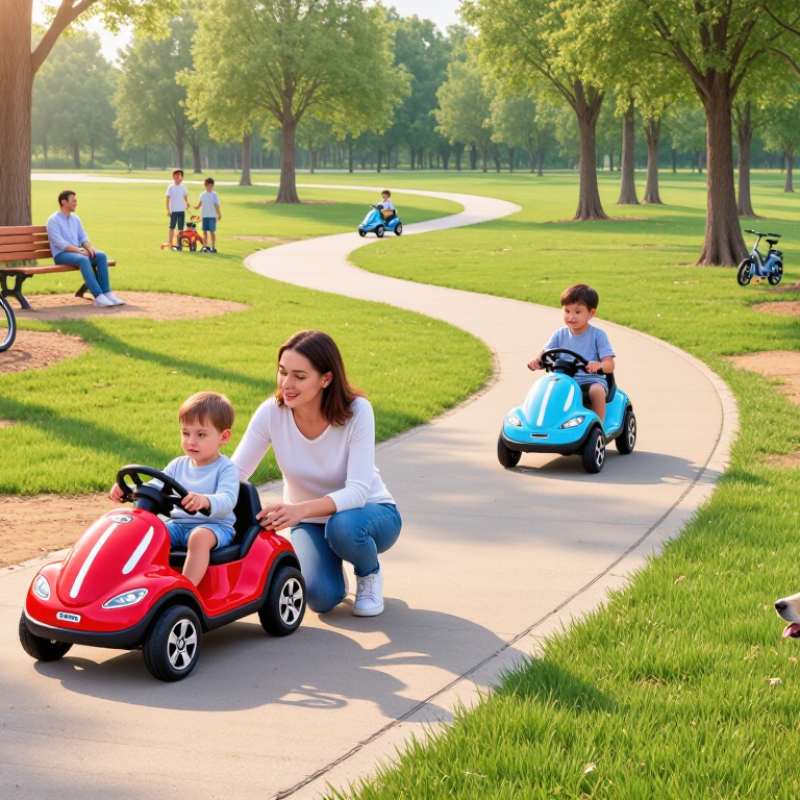
Low speed is sensible for beginners. It gives parents more time to intervene and helps children practise braking on flat, open ground. Older children may handle a higher setting, but only after demonstrating consistent steering and stopping. Small details matter, such as loose gravel, wet grass, nearby steps, and unexpected pets.

A neat age chart can still mislead. Children develop unevenly. Height, coordination, confidence, and attention span may matter more than birthday alone. Parents should read the manufacturer’s manual, use the slowest suitable setting, and reassess after every new environment. The goal is not exciting speed. It is controlled learning.
Why Adjust Kids Electric Car Speed for Different Ages?

What Are Kids’ Electric Car Speed Levels?

Why Adjust Kids Electric Car Speed for Different Ages?

Kids’ electric cars usually offer three practical speed levels: low, medium, and high. Low speed, around 2–3 km/h, suits toddlers who are learning steering and stopping. Medium speed, about 3–5 km/h, may fit confident preschoolers on smooth, open ground. High speed, often 5–8 km/h, should be reserved for older children with stronger coordination. These figures are common product ranges, not universal safety rules. Always check the vehicle’s instructions and controls.

Age alone does not decide readiness. A five-year-old may react slowly, while another may brake carefully. ASTM F963-23 provides U.S. toy safety requirements, but it does not create one age-based speed chart for every electric car. The U.S. Consumer Product Safety Commission estimated 145,500 toy-related injuries among children under 15 in 2022. That figure covers many toy types, not only electric cars, but it shows why speed deserves attention. Experience matters. My own caution is simple: children often focus on moving forward, not stopping quickly.

Tips: Begin with the lowest setting. Use a flat, dry surface away from driveways and water. Watch whether the child can release the pedal, steer around a soft obstacle, and stop without panic. Increase speed only after repeated calm practice. A remote stop function helps, but it cannot replace close supervision. Helmets and protective gear are sensible, even when the ride feels slow.

How Age and Driving Skills Affect Speed Settings

Why Adjust Kids Electric Car Speed for Different Ages?

How Age and Driving Skills Affect Speed Settings

A child’s age gives a useful starting point, but it never tells the whole story. A four-year-old may need the lowest speed and gentle acceleration. An older child may manage more speed after practicing steering and braking. Still, age alone is not enough.

Watch how the child reacts in a quiet, flat area. Can they stop before a cushion or cone? Do they turn slowly without hitting nearby objects? Keep the first sessions short. A caregiver should stand close, especially near driveways, slopes, and furniture. Feet can slip from pedals. Small hands may turn too sharply.

Speed should rise in small steps, not large jumps. Safety guidance commonly recommends reading the vehicle instructions and using the lowest setting during early practice. A child who drives smoothly for several sessions may be ready for a moderate increase. If they look frightened, lose control, or forget to brake, reduce the setting immediately. My own observation is that children often want more speed before developing better judgment. Adults can mistake excitement for readiness. I may also underestimate changing conditions, especially with a fully charged battery. Recheck the setting each time, and use protective equipment that fits properly.

Why Adjust Kids Electric Car Speed for Different Ages? - How Age and Driving Skills Affect Speed Settings

Age Group Typical Driving Ability Suggested Initial Speed Maximum Recommended Setting Suitable Riding Environment Adult Supervision Why the Setting Matters
2–3 years Beginning to understand steering and pedal or button control; reaction time and hazard awareness are still developing. 1–2 km/h 2–3 km/h Flat, private, traffic-free areas with plenty of open space. Continuous, close-range supervision; an adult should be able to stop the vehicle immediately. A slower speed gives a young child more time to release the control, steer, or respond to an obstacle.
3–4 years Can usually follow simple driving instructions but may turn suddenly or lose focus. 2–3 km/h 3–4 km/h Level lawns, smooth patios, and enclosed driveways away from vehicles. Continuous supervision with an accessible remote stop function when available. Moderate speed supports basic steering practice while limiting the distance traveled before an adult can intervene.
4–5 years Developing better steering accuracy, braking control, and awareness of boundaries. 3–4 km/h 4–5 km/h Open, dry, level surfaces with clearly defined boundaries. Close supervision; the child should ride only in areas checked by an adult. Gradual speed increases allow the child to build control without making turns and stops difficult.
5–6 years Often able to maintain a route, avoid simple obstacles, and stop when instructed, although judgment is still limited. 4–5 km/h 5–6 km/h Large private areas with no traffic, steep slopes, water, or loose ground. Active adult supervision; maintain visual contact throughout the ride. This range provides a balance between enjoyable movement and enough response time for unexpected obstacles.
6–8 years May demonstrate stronger coordination and route awareness, but speed judgment and risk assessment remain inconsistent. 5–6 km/h 6–8 km/h Controlled private areas with smooth surfaces and no pedestrians or road access. Frequent supervision; an adult should remain nearby and enforce riding rules. Higher settings should be considered only after the child can steer, stop, and avoid obstacles reliably.
8 years and older Some children can manage more complex controls, but ability varies significantly by vehicle design, experience, and physical size. 5–7 km/h Up to the manufacturer's limit Only suitable private areas that match the vehicle's instructions and local safety requirements. Supervision remains necessary; the adult should assess the child, vehicle, and riding area together. Age alone does not establish readiness. Consistent braking, steering, attention, and rule-following are more important than speed preference.

Safety note: These are conservative educational guidelines, not universal operating limits. Always follow the vehicle’s instructions, age and weight limits, use required protective equipment, and never allow children to ride on public roads or near traffic. The lowest setting should be used whenever the child is inexperienced, the surface is unfamiliar, or conditions change.

Why Lower Speeds Improve Safety for Younger Children

A child’s age changes more than height. It affects balance, judgment, reaction time, and the ability to follow instructions. Younger children may press the accelerator suddenly or steer toward an interesting object. Lower speeds give them more time to release the pedal and correct the direction. Speed matters.

In my experience, a slower setting makes early driving practice calmer. A child can focus on steering between two chairs instead of managing rapid movement. Small hands tire quickly. Reduced speed also lessens the force of minor bumps, although it cannot prevent every injury. Adults should remain close, especially near steps, driveways, water, pets, and other children. Protective equipment and flat, private practice areas add another layer of care.

Child-development guidance generally supports matching challenges to a child’s abilities, not only their age. A cautious adjustment is useful when a child cannot stop smoothly, looks frightened, or ignores basic instructions. Check the vehicle’s manual for speed controls, weight limits, charging requirements, and recommended surfaces. Local safety rules may also apply. My first assumption was that confident children needed more speed; that was too simple. Confidence can hide poor judgment. A lower setting may feel frustrating for an older child, yet controlled practice builds better habits. No setting is perfect. Supervising adults should observe each session and adjust gradually.

When Should Parents Increase the Car’s Speed?

Why Adjust Kids Electric Car Speed for Different Ages?

When Should Parents Increase the Car’s Speed?

Parents should increase speed only after a child shows consistent control. Age alone is not enough. A younger driver may understand the pedal, but still misjudge distance, turning, or sudden obstacles.

Start at the lowest setting. Watch the child drive on flat, private ground for several sessions. The child should stop before reaching a wall, release the pedal when startled, and steer around cones without hitting them. These simple actions matter more than confidence. Speed can rise one level after reliable control, not after a birthday. Keep the increase small, and test it again.

Industry data supports a cautious approach. The U.S. Consumer Product Safety Commission reported 231,100 toy-related emergency-department injuries involving children under 15 in 2023. This figure covers all toys, not electric cars specifically, but it shows why supervision remains important. The American Academy of Pediatrics also links injury risk with developmental readiness, impulse control, and the play environment. A fast car needs more stopping space.

A practical rule is simple: increase speed only when the child can stop calmly, keep both hands positioned correctly, and follow boundaries. If the child becomes excited, looks away, or repeatedly presses the pedal, reduce speed again. I would not treat the highest setting as a goal. Children develop unevenly, and one rushed adjustment can expose a weakness parents missed.

How to Adjust Speed Responsibly for Different Ages

Why Adjust Kids Electric Car Speed for Different Ages?

Adjusting speed responsibly means matching control to the child, not the car’s maximum setting. A two-year-old may steer late, stop slowly, and misread distance. An older child may react faster, but confidence can become risky.

The WHO Global Status Report on Road Safety 2023 recorded about 1.19 million road deaths worldwide in 2021. Ride-on cars are not road vehicles, yet this figure reinforces one principle: speed reduces decision time. Slower is not automatically safe. Supervision still matters.

The U.S. Consumer Product Safety Commission estimated 145,500 toy-related injuries among children under 14 in 2022. Its report does not isolate electric ride-on cars, so the number should not be treated as direct proof. It does show why careful use deserves attention.

For younger children, begin at a slow walking pace on a flat, enclosed surface. Keep the adult close enough to reach the controls. For children with better steering and braking skills, increase speed gradually, never suddenly. Practice stopping before allowing longer rides.

Check the child’s age range, weight limit, remote-control function, and speed settings in the product instructions. A helmet may add protection, but it cannot replace supervision or a safe riding area. Watch for delayed braking, sharp turns, and distraction. If these appear, reduce speed immediately.

I once assumed confident driving meant safe driving. It does not. Children can improve quickly, but judgment develops unevenly. That detail is easy to underestimate.

FAQS

What speed levels do children’s electric cars usually have?

Most offer low, medium, and high settings. Low is often 2–3 km/h. Medium may reach 3–5 km/h. High commonly reaches 5–8 km/h. These ranges vary. Check the instructions.

Which speed is suitable for toddlers?

Start with the lowest setting. A walking pace gives toddlers more time to steer and release the pedal. Use a flat, dry, enclosed area. Stay close.

Does age alone determine the correct speed?

No. Coordination, judgment, braking, and attention matter more than age alone. One five-year-old may stop carefully. Another may react slowly. Observe actual skills.

How can an adult test a child’s readiness?

Ask the child to steer around two soft obstacles. Watch whether they release the pedal smoothly. They should stop without panic. Practice stopping.

Why are lower speeds safer for younger children?

Lower speeds provide more time to correct steering mistakes. They may also reduce the force of small bumps. They cannot prevent every injury. Supervision remains necessary.

Where should children practice driving?

Choose a flat, dry surface away from driveways, steps, water, pets, and other children. A private open area works better than a crowded yard. Avoid slippery ground.

When should the speed be increased?

Increase speed only after repeated calm practice. The child should steer, stop, and follow instructions consistently. Raise the setting gradually, never suddenly. Confidence alone is not enough.

Can a remote stop function replace supervision?

No. A remote stop function can help during an unexpected movement. An adult should still remain within immediate reach. Helmets and protective gear add sensible protection.

What signs mean the speed should be reduced?

Reduce speed if braking is delayed, turns become sharp, or attention wanders. Fear and ignored instructions also matter. My earlier assumption was too simple: confidence can hide poor judgment.

Conclusion

Kids’ electric cars often offer several speed levels, allowing parents to choose a setting that matches a child’s age, confidence, and driving ability. Younger children may need the slowest speed because they are still learning how to steer, stop, and recognize obstacles. Lower speeds give them more time to react, reduce the chance of sudden collisions, and help them build basic driving skills in a controlled environment. Older or more experienced children may gradually use a higher setting when they can consistently follow instructions and handle turns, braking, and changing surfaces safely.

Learning how to control speed of kids electric cars for different ages involves more than simply selecting a faster level. Parents should supervise every ride, begin with the lowest setting, and increase speed only after the child demonstrates reliable control. Speed should also be reduced in crowded areas, near obstacles, on uneven ground, or whenever the child appears nervous or distracted. Regularly checking the vehicle’s controls and explaining safe riding habits can make each adjustment responsible and age-appropriate.

Madeline

Madeline

Madeline is a dedicated marketing professional with a wealth of expertise in our company's core offerings. With a keen understanding of the industry, she brings a unique perspective to her role, consistently delivering high-quality content that highlights the superior aspects of our products. As......